Discovering the Chromosomal Secrets Within Embryos
Preimplantation Genetic Testing, PGT, refers to chromosome or genetic testing performed after embryos are formed.
The goal is to confirm that there are no chromosomal or genetic abnormalities before transferring the embryo into the uterus.
This helps increase the chance of successful embryo implantation and supports pregnancy with a chromosomally and genetically healthy fetus.
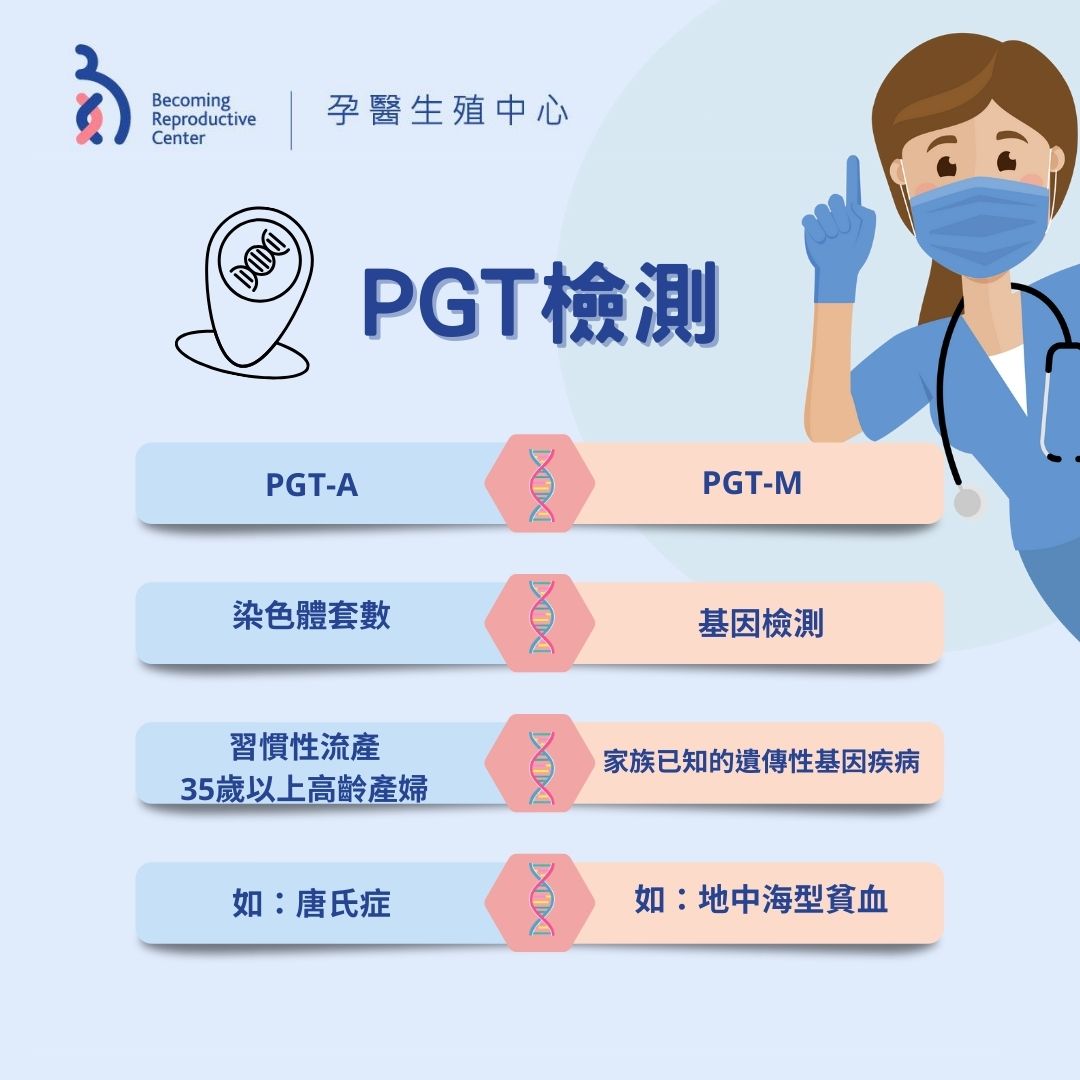
Preimplantation Genetic Testing, PGT, is divided into two types:
- 1.Preimplantation Genetic Testing for Aneuploidy PGT-A
Purpose:
Before embryo implantation, PGT-A checks whether the number of the 23 pairs of chromosomes is normal, and whether there are large segment deletions, ≧10 Mb, or unbalanced translocations.
Transferring embryos with normal chromosomes can help increase pregnancy rates and reduce miscarriage rates.
Suitable candidates:
a. Recurrent miscarriage b. Multiple failed embryo transfers, possibly affected by aneuploidy c. Advanced maternal age d. Family history of chromosomal abnormalities
All tests have limitations.
PGT-A cannot detect single-gene disorders, such as thalassemia, G6PD deficiency, polycystic kidney disease, PKD, spinal muscular atrophy, SMA, and other inherited genetic diseases.
It also cannot rule out spontaneous mutations during fetal development, small chromosomal duplications or deletions, imprinting disorders, and other issues.
- 1.Preimplantation Genetic Testing for Monogenic Disorders PGT-M
For couples carrying hereditary genetic diseases, there is a one-half to one-quarter chance of having a child with the same inherited condition.
To avoid passing the gene to the next generation, blood samples from family members may first be collected.
A molecular genetics laboratory then identifies the defective gene location and designs a customized genetic probe.
Genetic diagnosis can then be performed on the embryos. After confirming that the embryo does not carry the disease-causing gene, the embryo can be transferred back into the uterus, helping avoid the birth of a child with the same hereditary disease.
Common hereditary genetic diseases in Taiwan include:
Thalassemia, spinal muscular atrophy, fragile X syndrome, polycystic kidney disease, hemophilia, ankylosing spondylitis, and others.
Due to testing limitations, PGT-M cannot detect mutation genes that were not included in the test, non-familial hereditary diseases, small chromosomal deletions, or abnormalities in chromosome number.
Even after transferring an embryo tested normal by PGT, chorionic villus sampling or amniocentesis should still be considered after pregnancy is achieved.
References: Sofiva Genomics, Genomics BioSci & Tech
BRCIVF wishes your dreams come true!