Electrocautery vs. Cold Knife: Still Confused About the Difference?
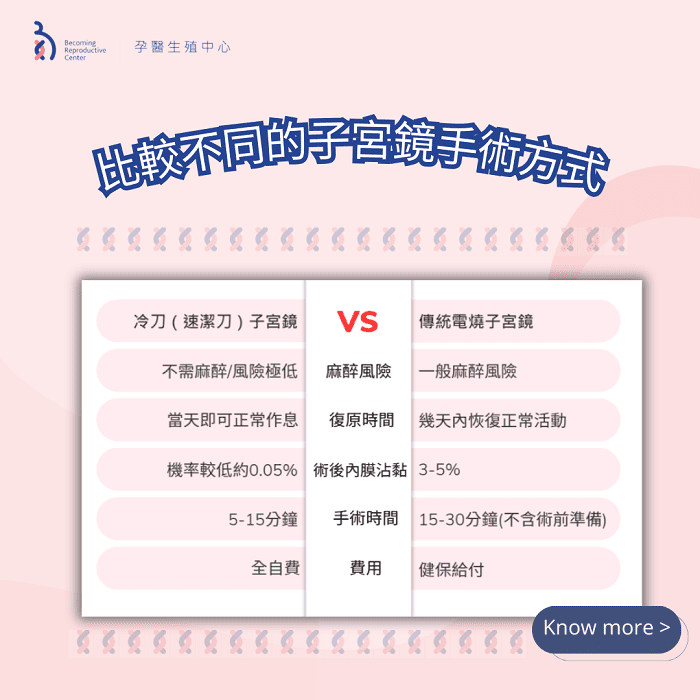
- 1.Electrocautery vs. cold knife: comparing different hysteroscopic surgical methods
Because endometrial polyps may affect conception, once endometrial polyps are confirmed, doctors usually recommend hysteroscopic polyp removal.
Currently, there are two main methods for hysteroscopic polyp removal: traditional electrocautery and the newer cold knife technique, also known as the TruClear system.
- 1.Traditional electrocautery hysteroscopy
Advantages:
It is suitable for various types of lesions and provides effective cutting and hemostasis.
Electrocautery generates high-temperature thermal energy, allowing the lesion to be removed while bleeding is controlled at the same time.
For larger or more complex lesions, electrocautery can provide better cutting and hemostatic effects.
Disadvantages:
- 1.Damage to surrounding tissue:
Because heat is generated, surrounding tissue may sustain thermal injury, increasing the risk of postoperative endometrial adhesions. - 2.Anesthesia risk:
Because the hysteroscope used is larger in diameter, anesthesia is required. Preoperative preparation is also needed, so it is not suitable for same-day outpatient treatment without preparation. There is also a risk of anesthesia-related side effects. - 3.Postoperative discomfort:
There may be more noticeable postoperative pain, and a longer recovery time may be required. - 4.Cold knife, TruClear, hysteroscopy
Advantages:
- 1.Minimally invasive:
The cold knife does not generate thermal energy, reducing damage to surrounding tissue and lowering the risk of postoperative endometrial adhesions. It is more suitable for patients preparing for pregnancy or undergoing infertility treatment. - 2.No anesthesia required:
The hysteroscope used is smaller in diameter, and in most cases, the procedure can be performed directly in the outpatient clinic. If there is concern about pain, painkillers may be taken before the procedure. - 3.Fast recovery:
The procedure time is short, about 5–10 minutes, and patients can quickly return to normal daily activities afterward. - 4.Suitable candidates for cold knife, TruClear, hysteroscopy
- 5.Women preparing for pregnancy, patients with infertility, or women with future fertility plans:
It can reduce the chance of intrauterine adhesions and avoid thermal injury, helping the endometrium maintain good integrity after surgery. - 6.Women with busy lives or work schedules:
There is usually no need for additional preoperative preparation, anesthesia, or hospitalization. Recovery is typically very fast, and normal daily activities can usually be resumed on the same day. - 7.Women with higher anesthesia risks:
This includes patients with chronic diseases or other medical conditions who are not suitable for anesthesia, as well as those concerned about allergic reactions or other risks caused by surgical anesthesia.
References:
Bielorai, B., et al. 2016. Hysteroscopic myomectomy: A review of the literature. Current Opinion in Obstetrics and Gynecology.
Harris, L. A., et al. 2015. Outcomes of the TruClear™ hysteroscopic system for the resection of endometrial polyps: A multi-center study. Journal of Minimally Invasive Gynecology.
Baker, S. R., et al. 2016. Evaluation of the TruClear™ system for the treatment of endometrial polyps: A prospective cohort study. Journal of Obstetrics and Gynaecology.
Fowler, S., et al. 2018. Endometrial polyps: Diagnosis and management. Journal of Clinical Endocrinology & Metabolism.
BRCIVF wishes your dreams come true!