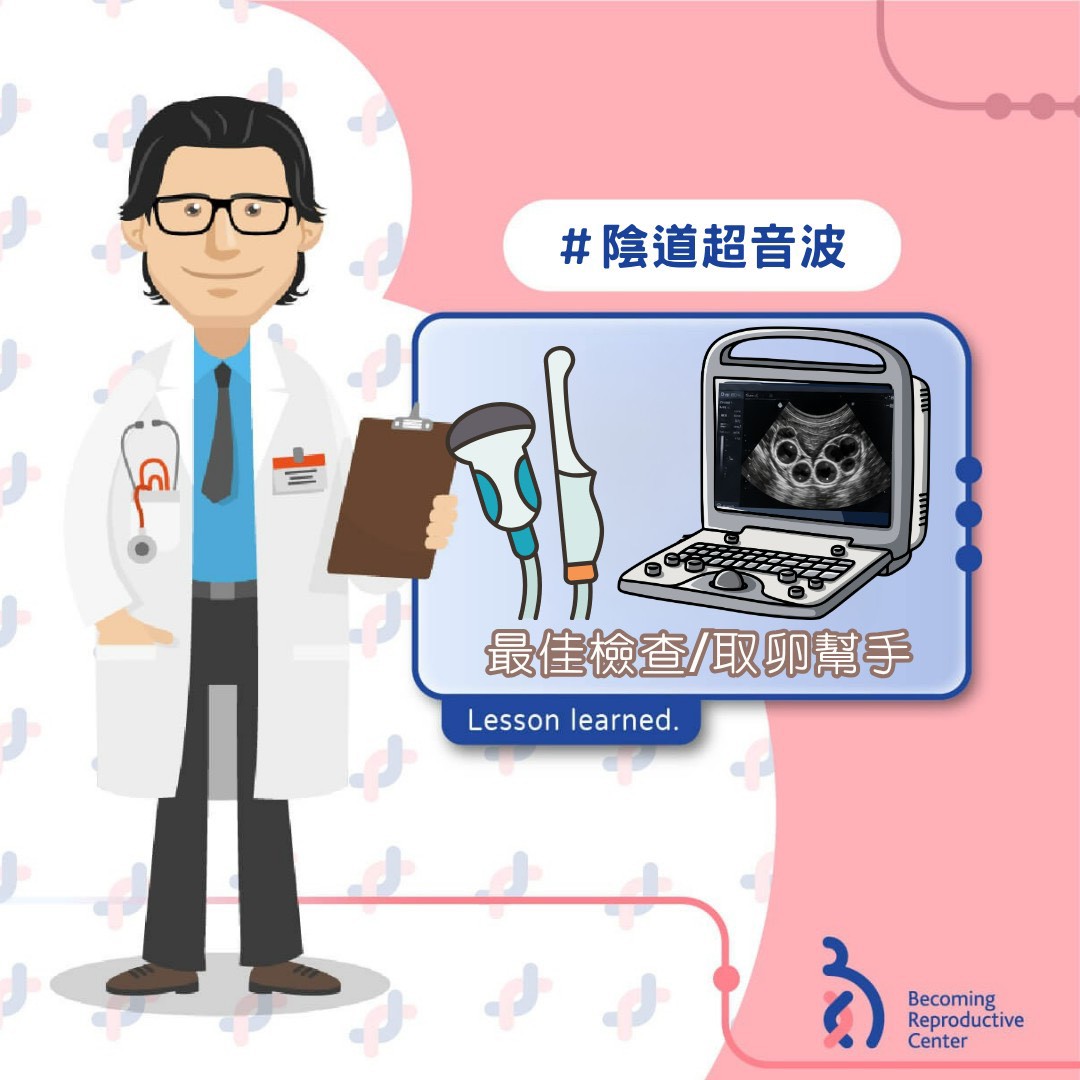
The Necessity and Clinical Considerations of Transvaginal Ultrasound in Egg Freezing and IVF Treatment
Let’s talk about a question that often comes up during consultations.
For women who have never had sexual intercourse but wish to undergo egg freezing, or for women who have been unable to successfully have intercourse after marriage and wish to proceed with IVF treatment, one major challenge during examination, monitoring, and egg retrieval is transvaginal ultrasound.
Compared with abdominal ultrasound, transvaginal ultrasound allows the probe to be positioned closer to the pelvic organs. Therefore, it provides a clearer and more accurate view of the ovarian structure and the ovaries’ response to ovulation-inducing injections. For this reason, transvaginal ultrasound is generally preferred for treatment monitoring and egg retrieval.
Before performing transvaginal ultrasound for the first time, I always explain carefully why it is needed, how it is performed, what the process involves, and the possible discomfort, pain, or bleeding that may occur. This allows patients to fully understand the procedure and give their consent before proceeding.
Patients often ask whether the injured area of the hymen will be sutured after the examination to stop bleeding. Generally speaking, because ultrasound examinations may still be needed later in the treatment process, we usually try to stop bleeding by applying pressure and may prescribe pain-relief and hemostatic medication. However, the wound is usually not sutured.
Some patients choose to undergo the first transvaginal ultrasound on the third or fourth day of their menstrual period, under clean and safe conditions. The natural discomfort and bleeding of menstruation may help mask the discomfort caused by the first transvaginal ultrasound.
Usually, after three or four examinations, the discomfort caused by transvaginal ultrasound gradually eases or disappears.
On the day of egg retrieval, transvaginal ultrasound is used for a longer period of time. However, the procedure is performed under sedation anesthesia, so there is no need to worry too much.
Some women have also shared that, after undergoing several examinations, they and their husbands were finally able to complete intercourse, which had previously felt very difficult for them, and could then try to conceive naturally.
If you have concerns or questions about undergoing transvaginal ultrasound, you are welcome to seek consultation.