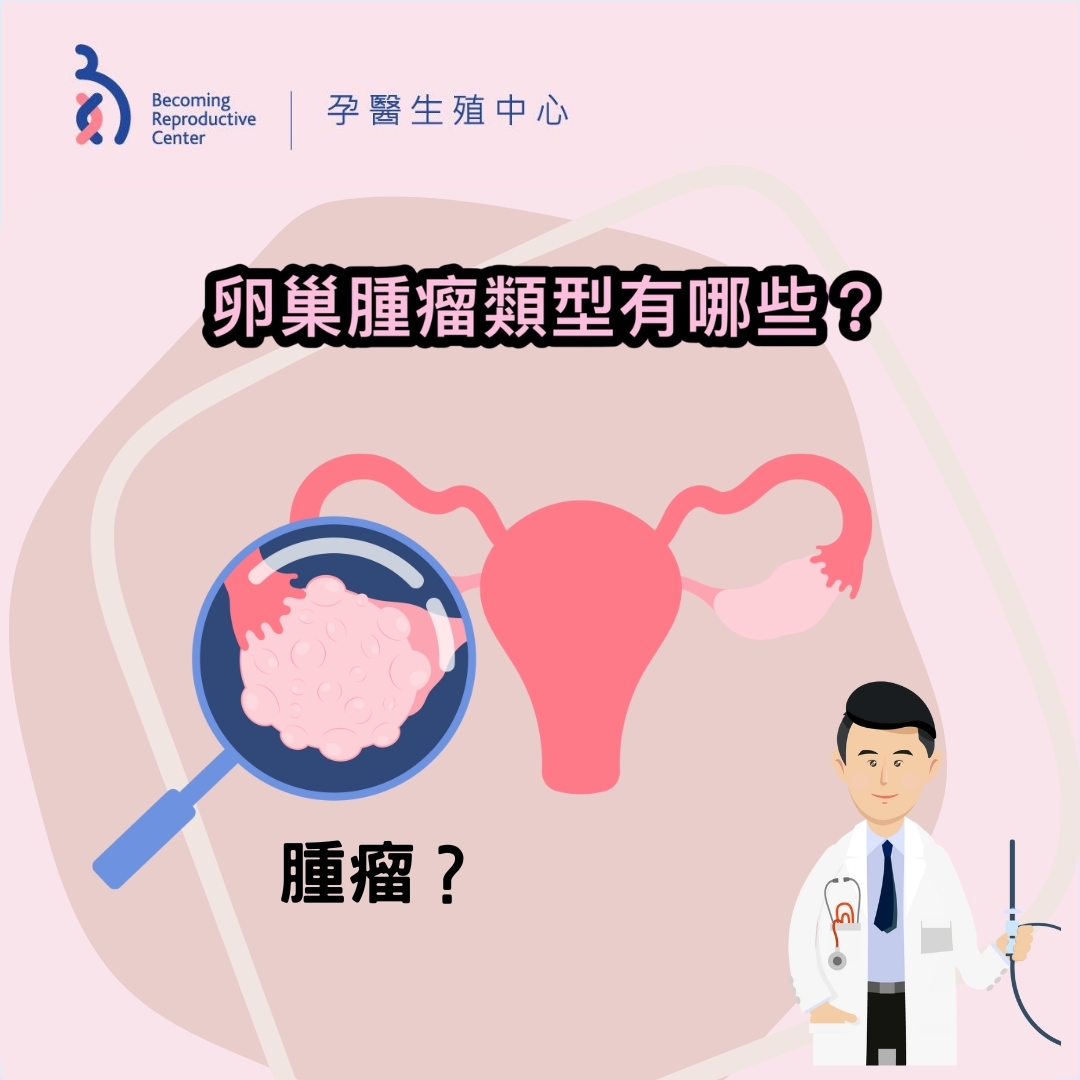
Common Ovarian Cysts and Ovarian Tumors in Gynecology
💡 Ovarian tumors or cysts are among the most common reasons patients visit a gynecology clinic.
Today, let’s introduce several common types of ovarian tumors ‼️
- 1.Functional Cyst
Corpus luteum cyst:
After ovulation, the corpus luteum tissue in the ovary may form a cyst. It usually disappears naturally after a few weeks and does not require special treatment.
Follicular cyst:
When ovulation does not occur, the follicle may fail to rupture and form a cyst. Most of these cysts also disappear naturally within a few weeks.
- 1.Dermoid Cyst
Also known as a teratoma, this type of cyst contains various cell components, such as skin, hair, fatty tissue, and sometimes even teeth or bone.
Most dermoid cysts are benign. However, because they may grow larger, they can cause pain or pressure symptoms, and may even twist, known as torsion. Therefore, surgical treatment is often needed.
The chance of malignancy is generally low, about 2%.
- 1.Chocolate Cyst, Endometrioma
This cyst forms when endometriosis causes endometrial-like tissue to grow inside the ovary.
It contains old blood and appears dark brown, which is why it is called a “chocolate cyst.”
These cysts are often associated with menstrual pain or chronic pelvic pain. Surgery or medication may be needed to control symptoms.
- 1.Serous Cystadenoma
This is the most common benign epithelial ovarian cyst. It contains clear fluid and usually has a smooth surface.
It is often asymptomatic, but as the cyst grows larger, it may cause abdominal discomfort or pressure symptoms.
- 1.Mucinous Cystadenoma
This type of cyst contains mucus-like material and often grows quite large, sometimes even weighing several kilograms.
Although it is usually benign, its large size may cause abdominal discomfort and compress nearby organs.
- 1.Granulosa Cell Tumor
Although most granulosa cell tumors are benign, they are among the few tumors with malignant potential.
These tumors can secrete estrogen and may cause irregular uterine bleeding.
💡 The management of ovarian cysts usually depends on the size, symptoms, and type of the cyst.
Most small and asymptomatic cysts can be monitored regularly.
If there is a possibility of malignancy, or if the cyst causes symptoms, surgical removal may be needed when necessary.
BRCIVF wishes your dreams come true!