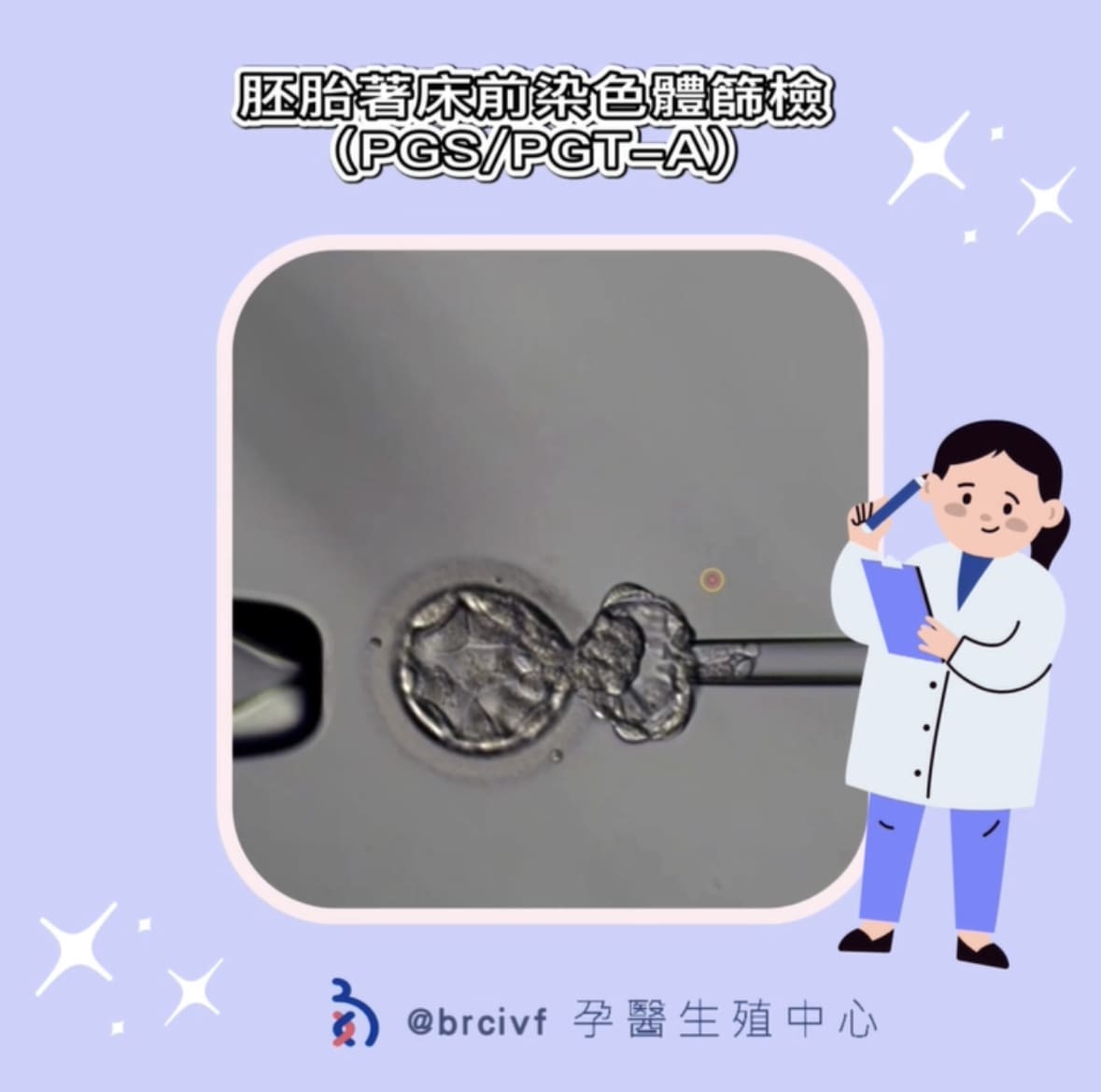
Will Embryo Biopsy Harm the Embryo?
BRCIVF embryologist Ci-Wen Hung shares:
Currently in Taiwan, most #PGT procedures perform biopsy at the blastocyst stage.
This is because sampling can be done without harming the inner cell mass, ICM, which will later develop into the fetus. It also allows more cells to be obtained for analysis.
#Blastocyst biopsy is usually performed on day 5 or day 6 after egg retrieval.
There are two methods, depending on the practice of each laboratory.
Method 1: On day 3 or day 4 after fertilization, a small opening is made in the zona pellucida, zona, of the fertilized egg using a laser.
After the embryo develops into a blastocyst, it can hatch through this opening. A few hatched trophectoderm cells, TE, which will later form the placenta, are then removed for testing.
Method 2: On day 5 of culture, the location of the inner cell mass is first identified.
A laser is then used on the zona pellucida at a site away from the inner cell mass. Biopsy is performed from the hatched trophectoderm cells.
Will #embryo biopsy harm the embryo?
Biopsy is a type of live-cell testing, and it is an invasive technique by nature.
Embryo biopsy obtains cells from the part that will later develop into the placenta, so that these cells can be tested in the laboratory.
Because only a small number of cells are removed, it usually does not have a major impact on implantation.
Although there is still a risk of harming the embryo, biopsy has its value.
For example, patients with hereditary genetic diseases, recurrent miscarriage, or repeated implantation failure can use testing to help select normal embryos, avoid repeated failure, and reduce the risk of having a child affected by genetic abnormalities.
BRCIVF wishes your dreams come true!